

Tricasts Are High-Risk, High-Reward — and That’s the Point
Getting the 1-2-3 in order is hard. Getting paid when you do makes it worthwhile. Tricast betting in greyhound racing asks you to predict the first three finishers in a race in the exact order they cross the line. In a six-runner field, that means identifying the correct combination out of 120 possible outcomes. The odds are stacked against you by definition, and the strike rate for even the most skilled tricast punters is low. But the dividends, when they land, can be extraordinary.
Unlike win bets or even forecasts, tricasts operate in a space where a single correct prediction can comfortably absorb dozens of losing bets. A straight tricast returning 300/1 or 500/1 is not unusual when outsiders fill the minor placings. Even a relatively straightforward tricast involving fancied dogs in a graded race can return 30/1 to 50/1. The trade-off is simple: low frequency, high magnitude. Whether that trade-off suits your betting temperament and bankroll is the first question to answer before you start placing tricast bets regularly.
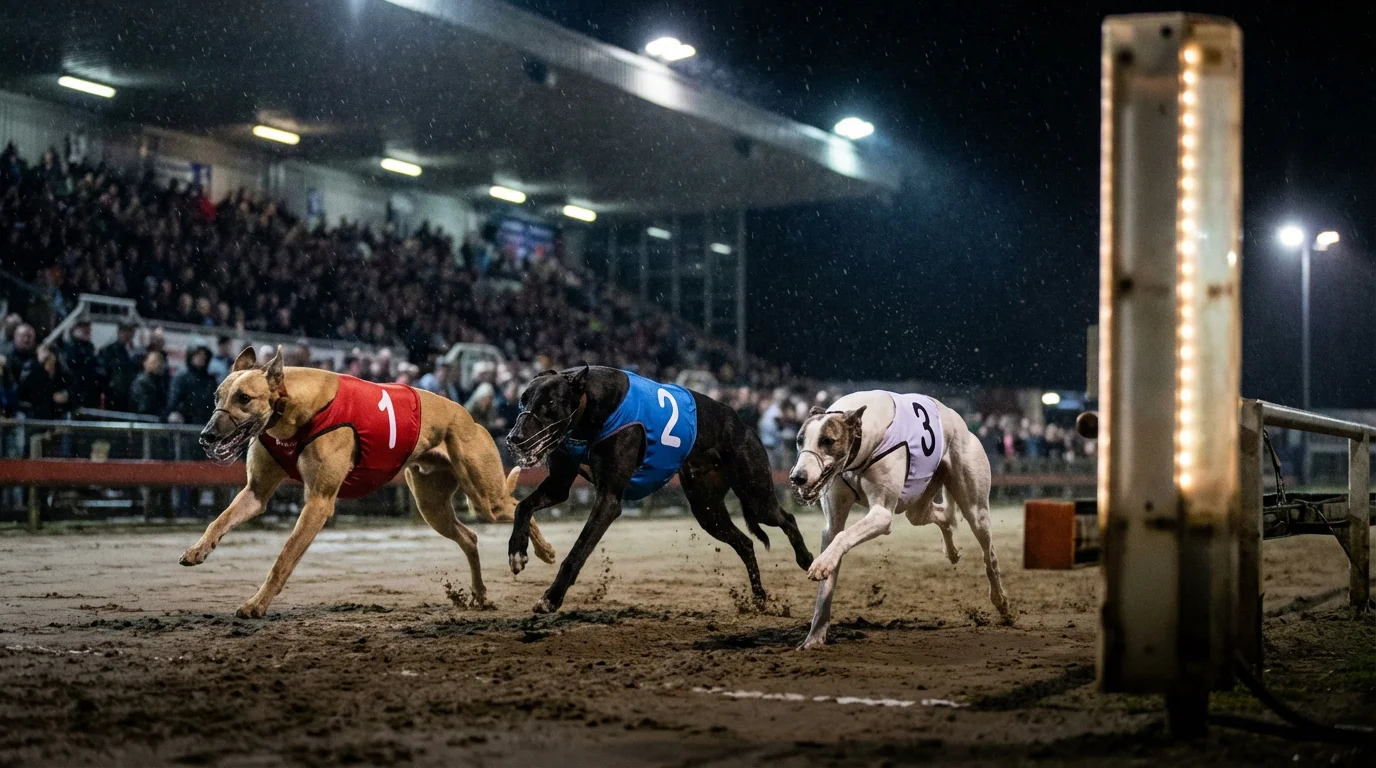
Greyhound racing is particularly suited to tricast betting for a structural reason: all UK races feature exactly six runners. In horse racing, you might face fields of twelve or sixteen, making the tricast permutations vast and the bet close to a lottery. With six dogs, the maths is more manageable. There are 120 possible straight tricast outcomes in a six-runner race, compared to 1,320 in a twelve-runner horse race. This smaller field size is what keeps tricast betting in greyhound racing within the realms of skill-based wagering rather than pure chance.
Straight vs Combination vs Reverse Tricast
Three formats, dramatically different cost profiles. Understanding the distinction between these tricast types is essential before you commit a penny of your bankroll to this market.
A straight tricast is the purest and cheapest version. You name three dogs and the exact order you expect them to finish: first, second, third. One bet, one unit stake. If your three selections fill the first three places in precisely the order you specified, you collect the dividend. Any other outcome — even if your three dogs finish 1-2-3 but in a different order — and the bet loses. The appeal is maximum dividend for minimum outlay. The risk is that you need to be exactly right, and “exactly right” in a greyhound race is a tall order.
A combination tricast, sometimes called an “all ways” tricast, covers every possible ordering of your selected dogs. If you pick three dogs, there are six possible ways they can finish in the top three: ABC, ACB, BAC, BCA, CAB, CBA. Your stake is multiplied by six. A £1 combination tricast costs £6. The advantage is that your three dogs simply need to fill the first three places in any order for you to collect. The dividend you receive depends on which specific ordering occurred — because the CSF tricast formula produces a different payout for each arrangement based on the SPs of the first, second and third-placed dogs.
You can also run combination tricasts with more than three selections. Naming four dogs and covering all tricast combinations requires 24 bets (4 x 3 x 2). Five dogs means 60 bets. Six dogs — the entire field — means 120 bets. The maths is straightforward: multiply the number of selections by one fewer, then by one fewer again. The cost escalates rapidly, which is why four-dog combination tricasts are the practical ceiling for most bettors. Beyond that, the outlay becomes difficult to justify unless you’re targeting a specific type of open, volatile race.
A reverse tricast is less commonly discussed but worth knowing about. It typically refers to a combination tricast with three selections — covering all six orderings. Some bookmakers use “reverse tricast” and “combination tricast” interchangeably for the three-dog version. The terminology varies, but the mechanics are the same: you’re covering all permutations of your three picks within the top three finishing positions.
The strategic choice between these formats comes down to confidence and race type. If you have a strong read on the race — a clear likely winner, a probable runner-up, and a confident pick for third — a straight tricast delivers the best return relative to stake. If you believe three dogs will dominate the finish but can’t separate the exact order, a combination tricast is the safer route at a higher cost. And if you want broader coverage, a four-dog combination tricast gives you a wider net, though the 24-unit cost means the dividend needs to be substantial to generate a meaningful profit.
How Tricast Dividends Are Calculated
Like forecasts, the tricast payout is formula-driven. The Computer Tricast uses the starting prices of the first three finishers and the number of runners to calculate a dividend to a £1 stake. No bookmaker sets the tricast odds in advance. The return is determined mathematically after the race, using the same CSF framework extended to three finishing positions.
The formula considers the implied probability of each of the three dogs finishing in their exact position. Because you need three conditional events to occur in sequence — this specific dog first, that specific dog second, another specific dog third — the combined probability is very small, and the dividend reflects that. The more improbable the individual components, the larger the tricast return.
In practical terms, the SPs of all three finishers matter, but the SP of the third-placed dog has the most dramatic impact on the overall dividend. This mirrors the forecast dynamic, where the second-placed dog’s price drives most of the variance. In a tricast, the third-place runner adds another layer of variability. If the first two home are both fancied dogs at short prices but the third-place finisher is a 12/1 outsider, the tricast dividend will be significantly larger than if a 3/1 shot had filled the same position.
This creates an actionable insight. In races where you can identify two likely principals for the top two places but the third spot is wide open, the tricast dividend will hinge on which outsider grabs third. A combination tricast naming your two principals plus one or two outsiders gives you exposure to the big-dividend scenario without requiring you to predict every detail of a chaotic race.
Tricast dividends are only declared in races where an official computer tricast is available, which in UK greyhound racing means races with six runners. If a non-runner reduces the field to five, the tricast market is typically void, and any tricast bets are settled as forecasts on the first two selections with the third selection disregarded. This is a rule that catches out punters who don’t check for late withdrawals. Always confirm the field size before committing to a tricast stake.
When Tricast Betting Makes Sense
The best tricast races share a common structure: a competitive middle of the market. Races dominated by one short-priced favourite are poor tricast territory. The favourite’s low SP compresses the dividend, and correctly predicting the 1-2-3 in such a race might only return 15/1 or 20/1 — barely compensating for the difficulty of getting all three positions right. Races where three or four dogs are closely matched in the betting, with SPs between 3/1 and 8/1, tend to produce the most rewarding tricast dividends when you land one.
Grade-wise, the middle tiers offer the best tricast opportunities. A1 and open races tend to feature genuinely superior dogs that finish with predictable regularity, compressing the tricast return. A7 and A8 races are more unpredictable but often feature inconsistent dogs whose form is hard to read reliably, making tricast prediction closer to guesswork. The sweet spot is somewhere around A3 to A5, where dogs are competent enough to produce form you can analyse but inconsistent enough to produce the kind of results that generate meaningful dividends.
Track selection matters too. Tight, bending tracks where first-bend interference is common — Romford and Crayford are classic examples — produce more chaotic results than galloping tracks with sweeping turns. Chaos is the tricast punter’s friend. When the form book gets disrupted by track dynamics, the SPs of the placed dogs tend to be higher, and higher SPs mean bigger dividends. If you’re going to specialise in tricast betting, narrowing your focus to one or two tracks where you understand the interference patterns and can identify the dogs most likely to avoid trouble gives you a genuine edge.
Another useful heuristic: look for races with a clear front-runner and a strong closer. If you can identify a dog that will almost certainly lead out of the traps and one that consistently finishes fast from behind, you’ve anchored two of your three selections. The question becomes which of the remaining four dogs will claim the middle spot. Combining your two anchors with one or two candidates for third in a small combination tricast gives you a structured approach rather than a scatter-gun one.
Treat Tricasts as a Weapon, Not a Habit
Used selectively, tricasts can transform a card. Used carelessly, they’ll drain a bank. The single biggest mistake in tricast betting is treating it as a default bet type — placing a tricast on every race because the potential payout looks exciting. At a hit rate of perhaps 3% to 5% for straight tricasts, you need the dividends when they land to be large enough to cover a long string of losses. If you’re placing £2 straight tricasts on every race across a twelve-race card, you’re spending £24 a night and collecting, on average, once every few weeks. The maths only works if your winning dividends consistently clear £300 to £500 or more.
The disciplined approach is to identify one or two races per card that fit the tricast profile: competitive, open, with dogs you’ve studied and a structural setup that favours a specific type of result. Stake meaningfully on those selected races and skip the rest. A £5 combination tricast on a carefully chosen race costs £30 and gives you genuine exposure to a significant return. That same £30 spread across ten races as tiny straight tricasts spreads your focus too thin and your returns too small.
Record-keeping is essential for tricast bettors. Track your hit rate, your average dividend, and your net P&L over rolling four-week periods. If your average winning tricast dividend divided by your average number of losing bets between winners produces a positive expected value, your approach is working. If it doesn’t, either your selection process needs refining or tricast betting doesn’t suit your particular skillset — and there’s no shame in that. Win betting and forecast betting are both perfectly viable long-term strategies that don’t require you to predict three positions in order.
The most profitable tricast punters share a common trait: patience. They watch far more races than they bet on. They pass on races that don’t fit their criteria, even when the temptation of a big payout is calling. They understand that the tricast isn’t a slot machine — it’s a precision instrument that rewards accuracy on the rare occasions you deploy it correctly and punishes you relentlessly when you use it indiscriminately.
Compare all bet types at latestgreyhoundresults.
Also see our bet types UK.
