
Distance Changes the Dog You’re Betting On
A greyhound race over 270 metres and a greyhound race over 640 metres are different sports that happen to share a track and a species. The distances demand different physical qualities, reward different running styles, produce different race dynamics, and require different analytical approaches from bettors. Treating all greyhound races as interchangeable — studying the form without adjusting for distance — is one of the quieter ways to erode a bankroll.
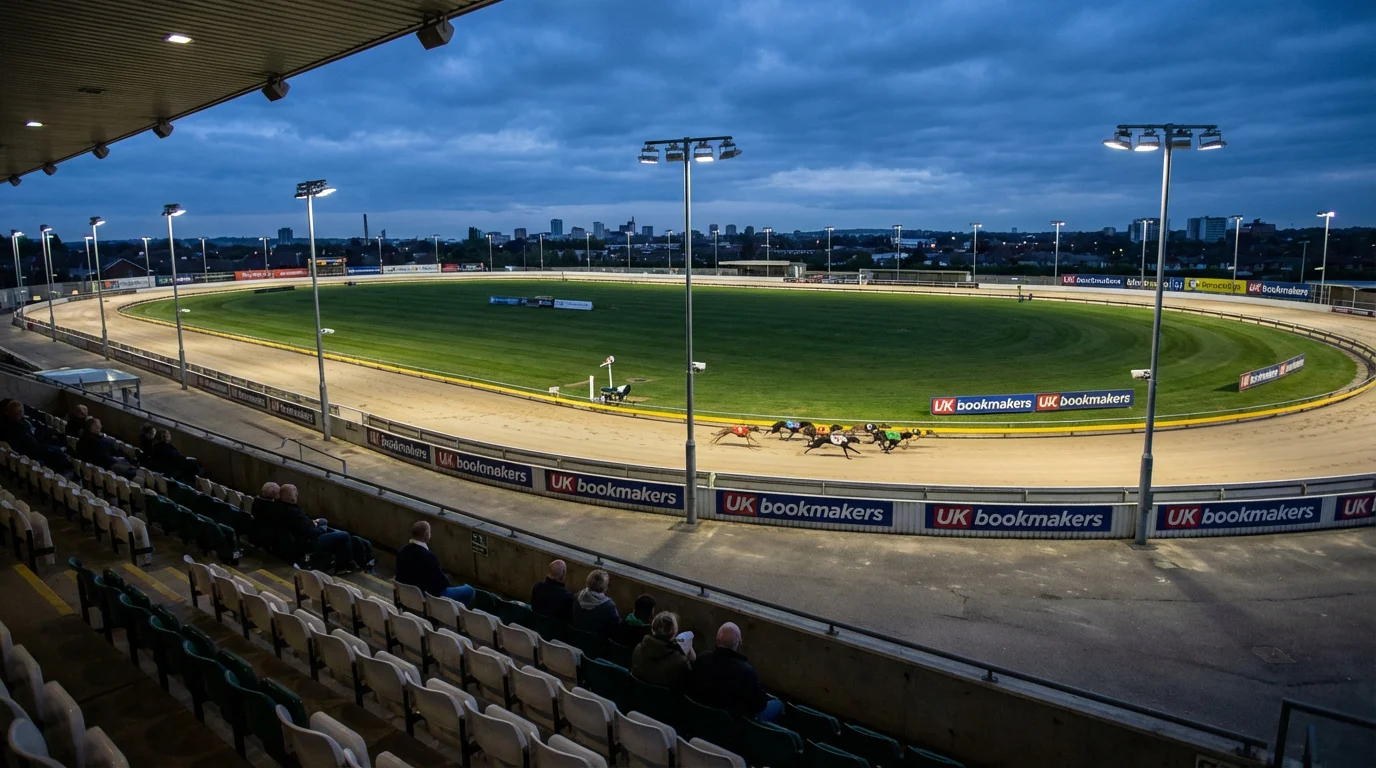
Sprint races at UK tracks are typically run over two bends, covering distances between 210 and 300 metres depending on the venue. The dogs reach the first bend within seconds of the start, navigate two turns, and finish before stamina becomes a factor. Staying races extend to six bends or more, with distances ranging from 600 to 900 metres. The dogs run for 35 to 50 seconds rather than 15 to 18, and the race unfolds across multiple phases where pace, positioning and endurance all influence the outcome.
The form book treats sprint and staying races differently, and so should you. A dog with brilliant sprint form is not necessarily a good bet in a staying race, even at a shorter distance than the dog’s usual stay. The physical and tactical demands are distinct, and dogs that excel at one often struggle at the other. Some dual-purpose dogs do exist — animals with enough speed for sprints and enough stamina for stays — but they are exceptions, and betting on the assumption that a dog’s sprint form transfers to a staying trip (or vice versa) is a reliable way to back losers.
Sprint Racing: Trap Speed Dominates
In a sprint, the trap break is everything. Over two bends and 270 metres, a dog that leads into the first bend is overwhelmingly likely to be in the first two at the finish. There simply isn’t enough race distance for a slow beginner to recover lost ground, no matter how fast it runs once it reaches full stride. The race is decided in the first three seconds — the time it takes to clear the traps, accelerate, and establish position approaching the first turn.
This makes sprint form analysis heavily weighted toward one variable: how quickly the dog leaves the traps. Run comments like QAw (quick away) and EP (early pace) are the most valuable indicators in sprint form. A dog with consistent QAw comments across its last five runs is likely to break cleanly again, and clean trap breaks in sprints translate directly into winning positions. Conversely, a dog with SAw (slow away) or MsdBrk (missed break) in its sprint form is at a severe disadvantage — one that its raw speed cannot compensate for over such a short distance.
Trap draw carries amplified importance in sprints. The inside traps (1 and 2) offer the shortest route to the first bend, and in a race where reaching that bend in front is decisive, the shorter route matters more than it does over four or six bends. Sprint statistics at most UK tracks show a measurable inside-trap bias, with trap 1 winning rates often two to four percentage points above the average. This isn’t a huge edge per race, but it’s a consistent structural factor that sprint bettors should weight more heavily than they would in a standard four-bend event.
The betting market on sprint races tends to be more predictable and more compressed than on longer distances. Favourites win sprints at a higher rate than they win staying races, because the reduced race distance minimises the scope for interference, bad luck and tactical errors that create upsets at longer trips. For bettors, this means sprint favourites offer lower value on a per-race basis (they’re shorter-priced and win at close to their implied probability), but they also provide a more stable platform for accumulator legs, forecast banker selections and structured staking plans that rely on consistent performance.
One often overlooked sprint factor is the recovery profile. A dog that raced three days ago and is entered in a sprint tonight faces a different physical demand than a dog returning to a staying race on the same timeline. Sprints are less taxing on stamina reserves but place extreme stress on the musculoskeletal system through explosive acceleration. Dogs racing on a quick turnaround may not reproduce their trap speed if the muscles haven’t fully recovered from the previous effort. Check the date of the last run when assessing sprint form — a gap of five days or more is preferable for peak performance.
Staying Races: Stamina and Pace Judgement
Staying races unfold over a longer narrative arc. The trap break still matters — no dog wants to start at the back of a six-dog field over any distance — but its influence diminishes as the race progresses. A slow-breaking stayer has four, five or six bends to recover its position, and the closing stages of a staying race reward sustained effort and pace judgement rather than explosive acceleration.
The key analytical shift in staying races is from trap speed to sectional analysis. How a dog distributes its effort across the race — running hard early and fading, or sitting behind the pace and finishing strongly — defines its staying profile. The form comments that matter most in stays are different from those in sprints: RnOn (ran on), Fin (finished strongly) and Chl (challenged) tell you about a dog’s ability to sustain or increase its speed late in the race. Fdd (faded) is the warning sign — a dog that fades in the closing stages of a staying race may lack the stamina for the trip, regardless of how quick its early sectionals are.
Weight becomes a more significant factor in staying races. Over a sprint, the difference between a 30kg dog and a 34kg dog is marginal — the race is too short for the heavier dog’s greater energy expenditure to matter. Over 640 metres, every additional kilogram requires more energy to carry for a longer distance, and heavier dogs tire more quickly. This doesn’t mean lighter dogs always win stays — muscle mass contributes to speed as well — but it means weight trends deserve closer attention in the staying division. A dog gradually putting on weight between races is a more concerning signal in a stayer than in a sprinter.
The race dynamics of staying events also create more opportunities for interference, crowding and positional changes. With six dogs running for 35 or more seconds across six bends, the probability of at least one significant incident — a bump at a bend, a blocked run on the rail, a dog checked by a faller — is substantially higher than in a two-bend sprint. This increased interference rate means staying form should be read with more tolerance for bad finishing positions. A stayer that finished fifth after being baulked at the fourth bend may have been running a winning race up to that point. The form figure says fifth; the race comments tell you the run was much better than that.
Pace analysis is more nuanced in staying races than anywhere else in greyhound racing. A staying race can be run at a fast early pace, where the leaders burn themselves out and closers sweep past in the final 100 metres, or at a moderate tempo, where the leaders conserve energy and hold their positions to the finish. Knowing which pattern is more likely depends on the running styles of the dogs in the field. If three of the six runners are confirmed early-pace types, the race is likely to be run fast from the outset, which advantages the closers drawn outside. If only one dog has genuine early speed, it may control the tempo and dictate terms from the front. Reading the probable pace scenario before the race, rather than reacting to it afterward, is one of the most productive habits a staying-race bettor can develop.
Adjusting Your Betting for Distance
The practical application of distance analysis starts with separating your form notes by trip. If you follow a particular track, maintain separate assessments for the sprint, middle-distance and staying divisions. Dogs that appear in multiple distance categories — a stayer dropping back to four bends, or a sprinter stepping up — deserve special attention, because the distance change creates uncertainty that the market may not price accurately.
For sprint betting, prioritise trap draw and early speed. Your selections should be dogs that break well from favourable draws. The market will generally price these dogs correctly, so the value in sprints comes from identifying occasions when a known fast breaker is available at a longer price than usual — perhaps because of a recent defeat that was caused by a trap malfunction or interference rather than a loss of form.
For staying bets, prioritise fitness, stamina profile and closing sectionals. Your selections should be dogs that have demonstrated the ability to maintain their speed through the final two bends of a staying trip. The market is less efficient at pricing stayers than sprinters, because staying form is harder to read — the interference rate creates more noise in the results, and fewer punters do the sectional analysis required to separate genuine ability from lucky or unlucky finishes.
Forecast and tricast bets play differently across distances. Sprint forecasts tend to pay smaller dividends because the finishing order is more predictable — the fast breakers occupy the first two places more often than not. Staying forecasts produce higher average dividends because the closing stages create more variability in the final placing order. If you’re looking for forecast value, the staying division is structurally more likely to produce it.
Distance Is a Filter — Apply It Before You Bet
Before you assess a dog’s form, check the distance. Before you evaluate a racecard, note which races are sprints, which are standard four-bend events, and which are stays. This simple step changes how you read every piece of form data that follows: the trap draw matters more in the sprint, the closing sectional matters more in the stay, and the middle-distance event sits between them with its own balance of speed and stamina factors.
Distance is not an afterthought or a tiebreaker. It’s the first filter in a systematic approach to greyhound form analysis. A dog’s ability is not a single number — it’s a profile that varies with distance, and the punters who account for that variation are working with a more accurate picture than those who don’t. Apply the distance filter before you assess the form, before you check the trap draw, and before you look at the price. Everything that follows will be sharper for it.