
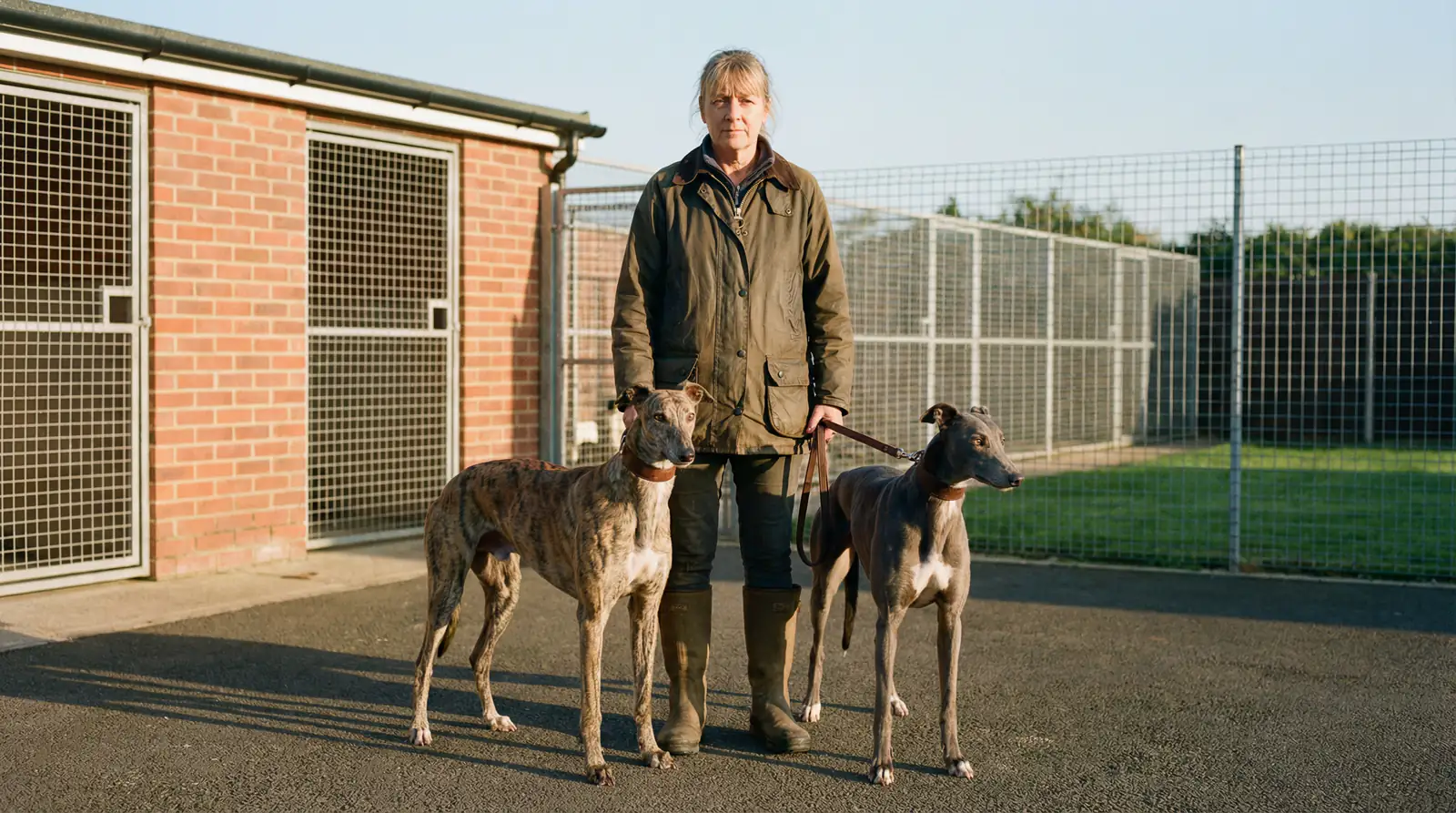
Trainers Set the Conditions Before the Race Begins
By the time six greyhounds enter the traps, the trainer’s work is already done. The feeding regime, the exercise programme, the trial schedule, the decision on which race to enter and from which trap to request — all of these choices have been made in the days and weeks before the dog reaches the track. The trainer is the most influential off-track variable in greyhound racing, and yet trainer analysis is one of the most underused tools in the average punter’s approach.
In horse racing, trainer and jockey statistics are a standard part of form study. In greyhound racing, the equivalent analysis receives far less attention, partly because greyhound form services don’t present trainer data as prominently as horse racing platforms, and partly because many punters see greyhound racing as a contest between dogs rather than between kennels. Both perspectives contain truth, but ignoring the trainer’s role means ignoring systematic patterns that repeat across dozens or hundreds of runners per year.
A trainer’s influence extends beyond physical preparation. Experienced trainers know which tracks suit which types of dogs, which trap draws to request for specific running styles, and when to step a dog up or down in grade for the best chance of a competitive run. These decisions affect the probability of a dog winning a given race as much as the dog’s raw speed does. Two dogs of identical ability will produce very different results if one is placed in the right races by a shrewd trainer and the other is entered in unsuitable events by a less attentive handler.
Trainer form analysis asks a simple question: is this kennel producing winners at a rate that suggests its dogs are well prepared, well placed, and running to their ability? The answer, tracked over time, reveals patterns that individual racecard analysis cannot.
Tracking Trainer Strike Rates
A trainer’s strike rate is the percentage of their runners that win over a given period. It’s the most basic trainer statistic and the most useful starting point for kennel analysis. A trainer whose dogs win 20% of the time is outperforming the expected average (roughly 16.7% in a six-runner field), which means their dogs are, collectively, running above the level the market assigns to them — or the trainer is consistently placing them in races where they have a genuine advantage.
Strike rates need context. A trainer with a 25% win rate from 200 runners is producing a statistically meaningful signal. A trainer with a 25% win rate from 12 runners might just be having a good month. Sample size matters enormously in trainer analysis, and the minimum threshold for a meaningful assessment is roughly 50 to 100 runners over the period you’re measuring. Below that, random variance overwhelms any underlying pattern.
Profit and loss to SP is a more telling metric than raw strike rate. A trainer whose dogs win 20% of the time but consistently at short prices may produce a negative return for backers — the dogs win often, but the prices don’t compensate for the losses. A trainer whose dogs win 15% of the time but include regular winners at 5/1 and 6/1 may generate a positive return despite the lower strike rate. The profit figure captures both the frequency of winners and the quality of prices, making it the best single-number summary of whether following a trainer is actually profitable.
Timeform, Sporting Life and several independent greyhound data services publish trainer statistics, though the depth and accessibility vary. Some services provide strike rates by track, by distance and by grade — allowing you to assess, for instance, whether a particular trainer’s dogs perform better at Romford than at Monmore, or whether their sprinters are more successful than their stayers. These filtered statistics are where the most actionable insights emerge, because they highlight specific strengths rather than blurring them into a single aggregate figure.
Building your own trainer database is straightforward if you bet regularly at one or two tracks. Record every runner’s trainer, finishing position, starting price and profit/loss over a period of three to six months. The patterns that emerge will be specific to your tracks and directly applicable to your betting. A trainer who sends winners to Crayford every other week is useful information if you bet at Crayford regularly — and it’s information that the published national statistics may not highlight as clearly as your own records do.
In-Form Kennels and Seasonal Patterns
Trainer form, like dog form, fluctuates. Kennels go through periods of sustained success — when the dogs are healthy, the preparation is clicking, and winner follows winner — and periods where nothing goes right. Identifying which phase a kennel is in, rather than relying on its annual average, is the analytical step that turns trainer statistics from a reference tool into a betting edge.
The simplest measure of current kennel form is a rolling fourteen-day or thirty-day strike rate. If a trainer’s annual strike rate is 18% but their last-fourteen-days rate is 30%, the kennel is in a hot spell. The dogs coming out of that yard in the next few days are more likely than usual to be fit, well prepared and running to their ability. This doesn’t guarantee winners — individual race dynamics still apply — but it tilts the probability in favour of the trainer’s runners and provides a valid reason to give them extra consideration in your form analysis.
Conversely, a kennel whose rolling strike rate has dropped from 18% to 8% is going through a cold spell. The reasons can vary: a virus running through the kennel (common in winter), key dogs retired or injured, a batch of new arrivals still finding their form, or simply a run of bad luck with trap draws and interference. Whatever the cause, the pattern is clear — the kennel’s runners are underperforming, and backing them at their usual prices represents poor value until the trend reverses.
Seasonal patterns are real but vary by kennel. Some trainers produce their best results in the summer, when track conditions are fast and consistent. Others peak in winter, when their experience managing dogs through cold weather and heavier tracks gives them an advantage over less adaptable operations. A few high-volume trainers maintain a steady output year-round, with no discernible seasonal swing. Tracking a trainer’s monthly strike rates across two or three calendar years reveals whether a seasonal pattern exists, and if it does, you can weight your betting accordingly — increasing exposure to a kennel during its strong months and reducing it during the historically weaker periods.
Trainer Moves: Upgrades, Switches and Signals
Beyond statistics, specific trainer decisions carry information that careful punters can exploit. The most common of these is the grade move — a trainer’s decision to run a dog at a different grade than its current form suggests. Grade moves can be upward (stepping a dog into stronger competition) or downward (dropping it to a lower grade), and the direction of the move tells you something about the trainer’s assessment of the dog.
An upward grade move after a win is standard — the grading system automatically promotes winners. But an upward move after a moderate performance, where the trainer has actively requested a tougher race, suggests the trainer believes the dog is better than its recent results show. Perhaps it’s been affected by bad draws, interference or unsuitable conditions, and the trainer expects a better performance against stronger opposition at a track or distance that suits the dog better. This kind of voluntary upgrade is a bullish signal that the market frequently undervalues.
Downward grade moves — requesting easier races after a run of poor results — can signal either declining ability or strategic placement. If the dog’s recent poor form is accompanied by weight fluctuations, slow trial times and fading race comments, the drop is likely genuine: the dog isn’t as fast as it was. If the recent poor form is attributable to unfavourable draws, interference or unsuitable distances, and the dog’s trial times remain strong, the drop may be strategic. The trainer is placing the dog where it can win, and a strong dog in a weaker race is a potential value bet.
Track switches are another informative trainer decision. When a trainer who usually races at Romford suddenly enters a dog at Crayford, ask why. It might be distance-related — Crayford offers a different range of trips. It might be trap-related — the dog might get a better draw under Crayford’s allocation system. Or it might be kennel strategy — the trainer knows the specific track characteristics suit the dog better. Track switches don’t happen randomly, and when a successful trainer makes one, it’s worth paying attention to the reasoning, even if that reasoning isn’t publicly stated.
Kennel companions running on the same card provide a final signal. When a trainer has two or three dogs at the same meeting, which one is the intended winner? Trainers don’t always publicise their priorities, but the entries sometimes reveal them. A kennel’s best dog entered in the feature race at the top of the card, while a lesser dog from the same kennel fills a space in a lower-grade event, tells you where the trainer’s attention is focused that evening.
Follow the Yard, Not Just the Dog
Individual dog form is the foundation of greyhound betting, and nothing in this analysis suggests otherwise. But individual form exists within a context, and the trainer is the most important part of that context. A dog’s form reflects not only its own ability but the decisions, preparation and kennel management of the person responsible for it. Two dogs of equal talent will produce different results if one is trained by a handler with a 22% strike rate at the venue and the other by a handler running at 12%.
The practical application is straightforward. Add a trainer column to your form notes. Track strike rates at your regular tracks. Note when a kennel goes on a hot streak or enters a cold spell. Pay attention to grade moves, track switches and the subtle signals that trainer decisions provide. None of this replaces individual form analysis — it sits alongside it, adding a layer of context that sharpens your selections and helps you distinguish between dogs that are genuinely well placed to win and dogs that merely look the part on paper.
The dog runs the race, but the trainer sets the stage. Follow both.